House on Mulholland
The ShardsHouse on Mulholland is the narrator’s family home, but in 1981 it functions less as a shared household than as a private world set apart from the rest of the family. During his parents’ twelve-week absence, the house gives him a measure of adult independence while also intensifying his isolation. Its rooms and grounds frame the beginning of his relationship with Ryan Vaughn and one of the narrator’s first sustained encounters with fear of the Trawler.
The house and its divided life
The narrator’s parents leave for Europe in an effort to repair their troubled marriage. He feels little investment in whether they succeed and describes the family’s outwardly affectionate routines as performative: posed Christmas photographs, parental attention during sleepovers, and beach-club outings do not match the emotional distance he experiences at home. He recognizes that his parents love him, but also that he is becoming an autonomous adult who no longer needs them as he once did.
The house makes that separation tangible. The narrator’s bedroom is large enough to operate as a home within the home, with its own entrance and veranda, kitchenette, refrigerator, bathroom, and access to the pool. Situated near the garage, it allows him to spend little time in the rest of the house. Even while he has the property to himself, the household is not entirely unattended: Rosa continues her regular work, looking after the narrator, maintaining the rooms, handling household tasks, and caring for the family dog, Shingy. The arrangement preserves the comforts of his privileged life while leaving him with unusual solitude.
Independence and unease
On Labor Day weekend, with Rosa away, the narrator takes responsibility for Shingy and watches the dog in the yard above the San Fernando Valley. The property’s boundary with Mulholland Drive is marked by a large hedge, behind which passing cars can occasionally be heard. The narrator’s surroundings offer privacy, but not complete separation from the outside world.
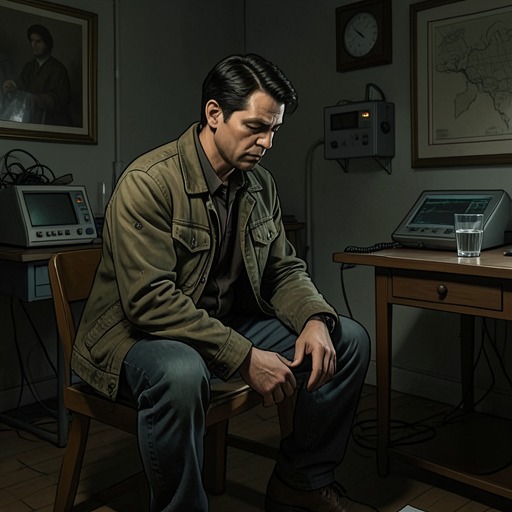
That autumn, he worries that the house might become a target in the series of home invasions. One night, after seeing a flashlight at Buckley, he returns home and becomes increasingly afraid of being alone there. A message from Debbie asks him to call back, but he avoids the conversation and turns on the lights, imagining an intruder and fearing for Shingy. He checks the yard, secures the doors, and activates the alarm. The threat remains unseen, yet the house’s isolation gives it force: familiar domestic space becomes a place where the narrator waits for danger.
Ryan Vaughn and the private retreat
The house is also where the narrator and Ryan’s private connection develops. Earlier, Ryan comes over when nobody else is home; the narrator brings him to his room, but Ryan is not ready to proceed with the relationship. Later, the two acknowledge their mutual interest and arrange to keep it concealed. Ryan describes the need for secrecy as a practical matter, reflecting his plan to get through high school, leave Los Angeles, and begin again elsewhere.
In September 1981, Ryan proposes spending a weekend at the house. The narrator recalls the invitation as uncomplicated and the weekend as largely organized around their relationship. They rarely leave, buy beer and steaks at the Beverly Glen Centre, and rely mostly on food Rosa has left in the refrigerator. The house’s separation from the rest of the family gives them privacy, but it cannot guarantee a future beyond that secluded interval. The narrator later calls this the last weekend untainted by the past, marking the house as both a setting for intimacy and a temporary shelter from what follows.
Narrative significance
House on Mulholland holds together two kinds of vulnerability. Its self-contained bedroom and empty household give the narrator room to act independently and to share a secret with Ryan; the same privacy makes him feel exposed when he fears an intruder. The house therefore shifts between refuge and threat without changing its physical boundaries.
The narrator’s later account also links the house to the emotional distance within his family and to the precariousness of adolescent plans. He and Ryan imagine leaving Buckley and starting over, but Ryan barely speaks to him for the remainder of their senior year. Recalled decades later, the house remains a point of convergence between independence, concealed desire, and the fear that the past will enter an apparently private world.